Make your website usable for everyone. vorza360 adds ARIA labels, keyboard-friendly navigation and reduced-motion options so screen readers and every visitor can use your site with ease.
The Challenge Elena works for a public organization in Riga where making sure everyone can access information is a legal requirement. She loved her site’s clean, minimalist look but was worried that adding accessibility features might make it look cluttered or ugly. She needed a way to help visually impaired citizens navigate the site without ruining the beautiful design she had worked so hard to create.
The vorza360 Solution We used what we call invisible labels. This is a smart way of coding where we add descriptive tags that only a screen reader can see. It is like having a secret tour guide who whispers exactly what is happening in a photo or what a button does, but only to those who need the help. We also used a special audit tool to find missing landmarks that had been overlooked, ensuring the site’s structure was rock solid.
The Result The site remains stunningly minimalist, but it is now a leader in inclusion. Visually impaired citizens can navigate every button and image perfectly, and Elena has total peace of mind knowing she is fully compliant with the law. She discovered that a site can be both beautiful and helpful at the same time.
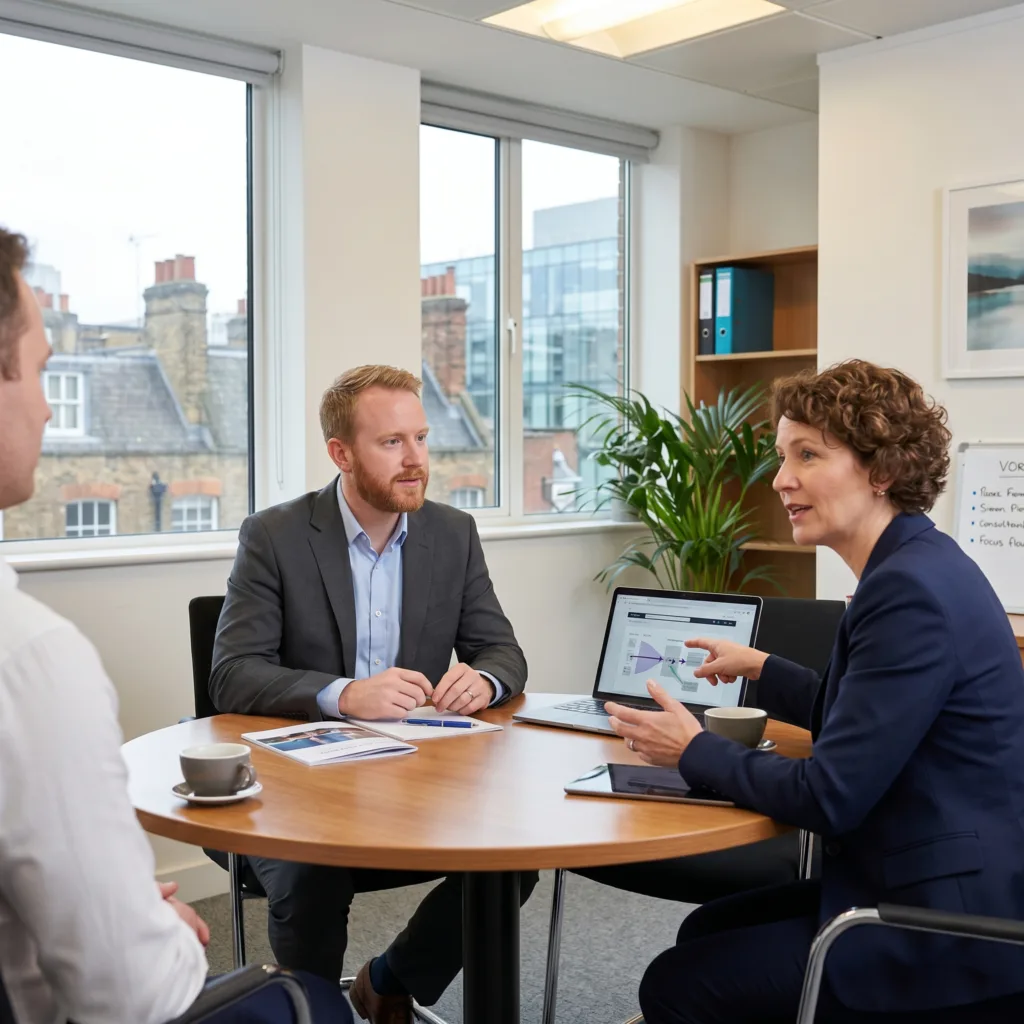
Simon Fletcher (UK)
The Challenge Simon realized that his online shop had several digital traps. If a customer was using a keyboard instead of a mouse, they would get stuck in certain sections or find it impossible to actually click the buy button. In the UK, millions of people rely on assistive technology, and Simon was effectively telling them they weren’t welcome in his store.
The vorza360 Solution We used a tool called focus flow to visualize exactly how a person moves through the site using only the tab key. We restructured his menu into a logical journey, making sure the most important buttons are easy to reach. We also made sure the site speaks clearly to voice assistants on iPhones and Androids. It is like taking a cluttered shop floor and clearing a wide, straight path directly to the checkout counter.
The Result Now, the add to cart button works perfectly for everyone. Simon has seen a boost in engagement because he stopped excluding a huge group of potential customers. His site is now a professional, welcoming space for all users across the UK, regardless of how they choose to navigate the web.
Sofia Lindquist (Sweden)
The Challenge Sofia has a high-end portfolio site that uses a lot of motion and transitions to look fancy. However, she knew that for some people, too much movement on a screen can be distracting or even make them feel unwell. She needed a way to keep her site looking premium while respecting the settings of users who prefer reduced motion.
The vorza360 Solution We implemented a smart system that checks a user’s device settings before the site even loads. If a visitor prefers less movement, the site automatically switches to smooth, simple transitions. We made sure this didn’t hurt her search engine rankings by keeping the content easy for Google to read. It is like having a luxury car with an adjustable suspension. It can be sporty for some and extra smooth for others, but it always looks and feels expensive.
The Result Sofia has a stunning, award-winning site that is also fully compliant with international accessibility standards. She can show off her work to a global audience in Sweden and beyond, knowing that every visitor will have a comfortable and enjoyable experience.
Anton Grigorov (Bulgaria)
The Challenge Anton’s WordPress site was a mess of disorganized code. It worked okay for a regular browser, but for anyone using an e-reader or a Kindle, the content was jumbled and hard to follow. He needed to clean up his structure so that his message could be heard clearly by everyone, including people with disabilities.
The vorza360 Solution We performed a deep structure repair. We updated the site with proper headings and digital landmarks that act like a table of contents for the entire page. This makes it easy for any device to understand which part is the header, which is the main story, and which is the footer. It is like taking a giant pile of loose papers and binding them into a perfectly organized book with clear chapters and page numbers.
The Result The site is now incredibly easy to read on everything from high-end laptops to simple e-readers. An added bonus was a noticeable boost in organic search rankings, because Google loves organized code just as much as people do. Anton now has a robust, accessible site that reaches more people than ever before.
Faisal Al-Zahrani (Saudi Arabia)
The Challenge Faisal manages a corporate portal for a mobile-heavy audience in the Middle East. He knew that many of his users rely on the TalkBack feature on their Android phones to navigate the web. He needed a keyboard-first navigation system that was flawlessly tailored for mobile touchscreens, ensuring that his corporate message was accessible to every professional in the region.
The vorza360 Solution We tailored the code specifically for mobile voice assistants, ensuring that every swipe and tap was met with clear, helpful feedback. We followed a professional service cycle, starting with a deep audit and ending with a full compliance report. It is like building a high-tech office where the elevators and doors are all voice-activated and work perfectly for everyone who enters.
The Result Faisal now has a high accessibility score that he proudly displays on his homepage. His portal is a model of professional inclusion in Saudi Arabia, providing a seamless experience for his entire audience. He is proud to have a site that represents the modern, welcoming values of his brand.
Arpita Iyer (India)
The Challenge Arpita was building a public-facing kiosk system and needed it to work perfectly within modern frameworks like React. She needed a high-contrast mode for people who have trouble seeing small text or colors and a way to ensure that no user was left behind. She wanted to build a digital bridge that made her services available to everyone in India.
The vorza360 Solution We used clean coding logic to keep the site fast and added a high-contrast mode that is remarkably easy to read. We didn’t just guess if it worked; we performed user simulation tests where we navigated the entire site using only a keyboard. It is like a team of engineers testing every inch of a new bridge to make sure it is safe and easy for everyone to cross, no matter what vehicle they are using.
The Result The kiosks are a massive success, and the feedback has been wonderful. Arpita has created a truly inclusive service that proves modern technology can be used to bring people together. She is happy to work with a partner who truly understands how to build a better, more accessible web for everyone.
How we do it
vorza360 builds digital bridges that ensure no user is left behind.
Creative Approaches
We focus on “Invisible Labels.” By using cross browser compatibility code HTML alongside ARIA labels, we creatively add descriptions to buttons and images that only screen readers can “see.” This keeps your design looking clean for everyone while making it fully functional for users with visual impairments.
Insightful Strategies
We implement “Keyboard-First Navigation.” Our strategy ensures that every link, form, and menu is reachable without a mouse. This insightful approach not only helps users with mobility issues but also improves your cross browser compatibility by following universal web standards.
Tailored Solutions
We solve specific cross browser compatibility issues and solutions for assistive tech. Since different screen readers can act differently on Chrome versus Safari, we tailor your code so that your “Add to Cart” button speaks clearly on every single device.
Creative Approaches
We focus on “Invisible Labels.” By using cross browser compatibility code HTML alongside ARIA labels, we creatively add descriptions to buttons and images that only screen readers can “see.” This keeps your design looking clean for everyone while making it fully functional for users with visual impairments.
Insightful Strategies
We implement “Keyboard-First Navigation.” Our strategy ensures that every link, form, and menu is reachable without a mouse. This insightful approach not only helps users with mobility issues but also improves your cross browser compatibility by following universal web standards.
Tailored Solutions
We solve specific cross browser compatibility issues and solutions for assistive tech. Since different screen readers can act differently on Chrome versus Safari, we tailor your code so that your “Add to Cart” button speaks clearly on every single device.
Tools
Tools vorza360 Offers for This Service
vorza360 ARIA-Audit
A custom tool that scans your site for missing labels and broken cross-browser compatibility links.
vorza360 Contrast-Check
A plugin we use to ensure your text colors are easy to read for people with low vision.
vorza360 Screen-Sync
A testing suite that mimics how different browsers (like Firefox or Edge) read your site aloud.
vorza360 Focus-Flow
A tool that visualizes the “tabbing” order of your site to ensure a logical journey for keyboard users.
Multiple Platform Support
vorza360 ensures your site is accessible across all browsers and operating systems
Desktop Browsers
Perfecting the experience for JAWS and NVDA screen readers on Chrome and Firefox.
iOS Devices
Optimizing for VoiceOver to ensure your mobile site is a leader in cross-browser compatibility.
Android Devices
Testing with TalkBack to provide a smooth, accessible experience for millions of users.
Public Kiosks
Setting up high-contrast and large-text modes for public-facing touch screens.
E-readers
Ensuring your content structure is clean enough to be read on Kindle or other tablets.
Smart TVs
Designing accessible menus that can be navigated using only a simple remote control.
Desktop Browsers
Perfecting the experience for JAWS and NVDA screen readers on Chrome and Firefox.
iOS Devices
Optimizing for VoiceOver to ensure your mobile site is a leader in cross-browser compatibility.
Android Devices
Testing with TalkBack to provide a smooth, accessible experience for millions of users.
Public Kiosks
Setting up high-contrast and large-text modes for public-facing touch screens.
E-readers
Ensuring your content structure is clean enough to be read on Kindle or other tablets.
Smart TVs
Designing accessible menus that can be navigated using only a simple remote control.
Multiple Framework Support
React
Implementing “Fragment” logic to keep your cross-browser compatibility code HTML clean and accessible.
Angular
Using A11y modules to manage focus and ARIA live regions automatically.
Vue.js
Creating accessible “Transitions” that respect a user’s “Reduced Motion” settings.
Tailwind CSS
Utilizing accessibility plugins to ensure colors meet official WCAG standards.
WordPress
Cleaning up theme code to fix common cross-browser compatibility issues and solutions.
Bootstrap
Upgrading default components with better keyboard support and ARIA roles.
Svelte
Using Svelte’s compile-time checks to catch accessibility errors early.
Next.js
Ensuring “Server-Side” content is indexed correctly by both Google and screen readers.
Our Service Cycle
vorza360 follows a clear path to make your business accessible to all.
Step 1
Accessibility Audit
Step 2
Structure Repair
Step 3
ARIA Integration
Step 4
Compatibility Testing
Step 5
User Simulation
Step 6
Compliance Report
Step 1
Accessibility Audit
We check cross browser compatibility online to see how screen readers handle your current site.
Step 2
Structure Repair
We update your cross browser compatibility code HTML with proper headings and landmarks.
Step 3
ARIA Integration
Our team adds “Roles” and “Labels” to interactive parts like menus and pop-ups.
Step 4
Compatibility Testing
We perform cross browser compatibility testing to ensure accessibility works on all platforms.
Step 5
User Simulation
We navigate your site using only a keyboard to find any “trap” points or confusing paths.
Step 6
Compliance Report
We provide a final cross browser compatibility checker report showing your high accessibility score.
Here is what our Clients are saying About us
Oliver Bennett (Australia)
vorza360 implemented ARIA roles, properties, and states throughout our web application making it accessible to screen reader users. Accessibility that is built in rather than added as an afterthought.
Fatimah Al-Shammari (Saudi Arabia)
vorza360 audited our HTML for accessibility and implemented the ARIA labels, live regions, and keyboard interaction patterns that our public-facing platform requires for compliance.
Silviu Ionescu (Romania)
vorza360 implemented WCAG-compliant HTML with proper ARIA landmark roles, focus management, and the keyboard navigation our users who rely on assistive technology require.
Divya Nair (India)
vorza360 built ARIA-compliant HTML for our government project with the accessibility standards our public sector client specifies. Accessibility testing with screen readers that validated our implementation.
Daniel Park (South Korea)
vorza360 implemented ARIA for our complex web application, custom widgets, dynamic content regions, and modal dialogs, with the screen reader behaviour our accessibility testing validated.
Adaeze Obi (Nigeria)
vorza360 implemented ARIA attributes for our platform ensuring our web content is accessible to users with disabilities. Inclusive HTML that serves our full user base.
More about HTML5
HTML5 Development
Build the foundation of your digital success with expert HTML5 development services.
Got questions? We’ve got answers. Find everything you need to know about using our platform, plans, and features
What is ARIA and when should it be added to HTML elements?
ARIA (Accessible Rich Internet Applications) is a specification of HTML attributes, roles, states, and properties, that communicate the purpose, behaviour, and current state of elements to assistive technologies when the information cannot be conveyed through native HTML semantics alone. The first rule of ARIA is: never use ARIA when a native HTML element already communicates the same information. A button element is already a button, adding role=’button’ to a div is far less reliable. ARIA is needed when building custom interactive widgets that have no native HTML equivalent: autocomplete dropdowns, modal dialogs, tab panels, tree views, drag-and-drop interfaces, and data grids. In these cases, ARIA attributes allow screen reader users to understand and operate the custom component. vorza360 applies ARIA precisely, using it where native HTML is insufficient, not as a first resort.
How does vorza360 implement ARIA landmarks to improve page navigation for screen reader users?
ARIA landmark roles, or their equivalent HTML5 semantic elements, divide the page into navigable regions that screen reader users can jump between directly without reading through every element. vorza360 implements the complete set of landmarks on every page: the main landmark (via the main element) marks the primary content, allowing users to skip directly to it without tabbing through header navigation. The navigation landmark (via nav) marks navigation menus. The header element provides the banner landmark. The footer provides the contentinfo landmark. The aside element provides the complementary landmark for secondary content. The search landmark is implemented via a form element with role=’search’ for site search inputs. We also name multiple instances of the same landmark type (multiple nav elements) using aria-label to distinguish them, ‘Primary navigation’ versus ‘Breadcrumb navigation’.
How does vorza360 implement accessible modal dialogs and dropdown menus using ARIA?
Modal dialogs and dropdown menus are among the most complex accessibility challenges in web development because they require sophisticated keyboard interaction and focus management that must be communicated to assistive technologies. For modal dialogs, vorza360 uses role=’dialog’ with aria-modal=’true’, provides an accessible name via aria-labelledby pointing to the dialog’s heading, implements focus trapping so keyboard users cannot tab out of the open dialog, moves focus to the dialog on open and returns it to the trigger on close, and closes the dialog on Escape key press. For dropdown menus, we use the appropriate pattern, either a disclosure button with a container or the full ARIA menu/menuitem pattern for navigation menus, implementing aria-expanded on the toggle button and arrow key navigation within the menu.
What is the difference between WCAG levels A, AA, and AAA, and which does vorza360 target?
WCAG (Web Content Accessibility Guidelines) defines three conformance levels. Level A is the minimum, covering the most critical barriers that would make content completely inaccessible. Level AA is the widely adopted standard for business and government websites, it includes all Level A requirements plus additional criteria covering colour contrast, captions for pre-recorded video, error identification in forms, and consistent navigation. Level AAA is the highest level, covering criteria that may not be achievable for all content types. vorza360 targets WCAG 2.1 Level AA as the standard for all web projects. This is the level required by accessibility legislation in many jurisdictions (including the EU Web Accessibility Directive and ADA compliance guidance in the US), and it represents the right balance between comprehensive accessibility coverage and practical implementation feasibility for most content types.
How does vorza360 test HTML accessibility to ensure it meets WCAG standards?
Accessibility testing requires both automated tools and manual evaluation, neither alone is sufficient. Automated tools catch approximately 30 to 40 percent of WCAG violations. vorza360 uses axe-core (via the axe browser extension and Playwright integration) for automated accessibility scanning, identifying issues like missing alt text, inadequate colour contrast, improper form labelling, and missing ARIA attributes. We supplement automated checks with manual keyboard-only navigation testing, verifying that all interactive functionality is reachable and operable without a mouse and that focus order is logical. We test with actual screen readers, NVDA with Firefox and VoiceOver with Safari, to validate the announced experience for blind users. We also check for the presence of visible focus styles, sufficient touch target sizes, and text resizing behaviour. Identified issues are documented with WCAG criterion references and resolved before delivery.