
Software Modernization & Migration
vorza360 offers full-spectrum software modernization & migration services, transforming your old vintage applications into efficient, secure, and cloud-ready systems. We focus on enhancing performance and reducing maintenance costs through strategic software modernization development services.

Shopify

WordPress
Figma
PHP
Flutter
React Js
Node Js
Python
Swift
Java
Vue.js
Kotlin
CSS
HTML
JavaScript
Customer Success Story

Thomas Weiss (Germany)
The Challenge: Thomas’s insurance company ran core processes on a system built in the early 2000s. It worked, but it ran on infrastructure that was approaching end of life, couldn’t integrate with modern tools, and only a handful of people in the company still understood its internals. Every year they delayed the modernisation, the risk grew.
The vorza360 Solution: We assessed the legacy system thoroughly before touching anything, documenting every process and data structure it handled. We rebuilt the core functionality on a modern stack in phases, running old and new in parallel until each phase was validated. Data migration was handled with full reconciliation at every stage.
The Result: Thomas’s company completed the modernisation without a single day of operational disruption. The modern platform integrated with tools the business had been waiting years to adopt, and the institutional knowledge risk, the handful of people who understood the old system, was eliminated as the new system was documented from the start.

Fatima Al-Rashidi (Bahrain)
The Challenge: Fatima’s financial services firm had a customer-facing application that was slow, looked dated, and ran on a framework the vendor had stopped supporting. Customers were complaining about the experience and occasionally switching to competitors who had more modern platforms. The business case for modernisation was clear but the execution risk felt significant.
The vorza360 Solution: We modernised the application in layers, updating the front end first to improve the user experience immediately, then migrating the backend progressively while maintaining the existing data structures. Customers saw improvement within weeks of the engagement starting, long before the full modernisation was complete.
The Result: Customer complaints about the platform stopped within the first month as the front-end improvements went live. By the time the backend migration was complete, Fatima’s firm had a fully modern platform and had stopped losing clients to better-looking competitors. The phased approach meant the business saw benefits throughout rather than waiting for a big-bang release.
Cosmin Dinu (Romania)
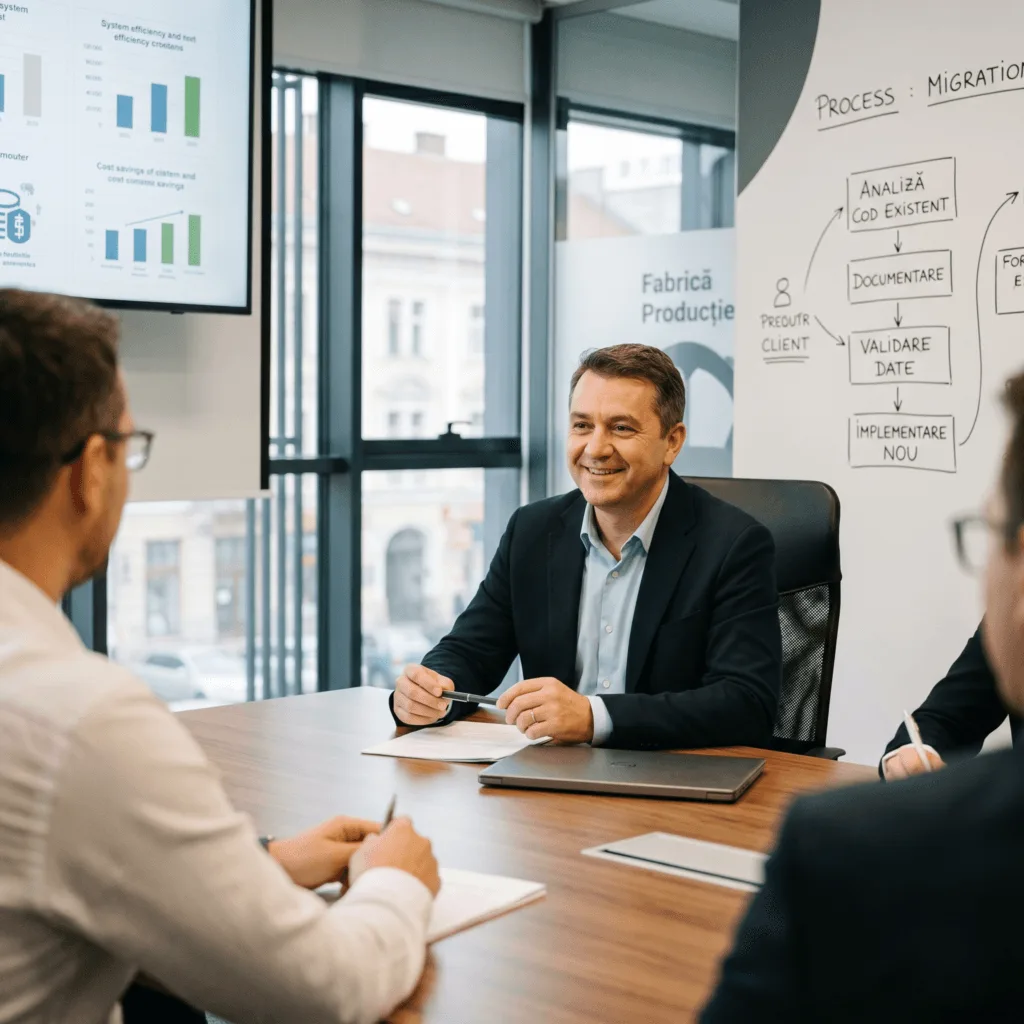
The Challenge: Cosmin’s manufacturing business had a production planning system that had been customised extensively over fifteen years. The base product was no longer supported, many of the customisations were undocumented, and the system ran on hardware that was failing intermittently. He needed to migrate without losing the business logic that fifteen years of customisation had accumulated.
The vorza360 Solution: We spent significant time reverse-engineering and documenting the existing customisations before designing the migration. Every piece of business logic was captured, rebuilt on the new platform, and validated against the old system’s output before anything went live. The migration happened during a planned shutdown period.
The Result: Cosmin’s production planning continued without interruption after the migration. The business logic that fifteen years of customisation had embedded was preserved completely, and the new platform was fully documented, meaning the institutional knowledge that had lived in undocumented code was now explicit and accessible.
Pradeep Nair (India)
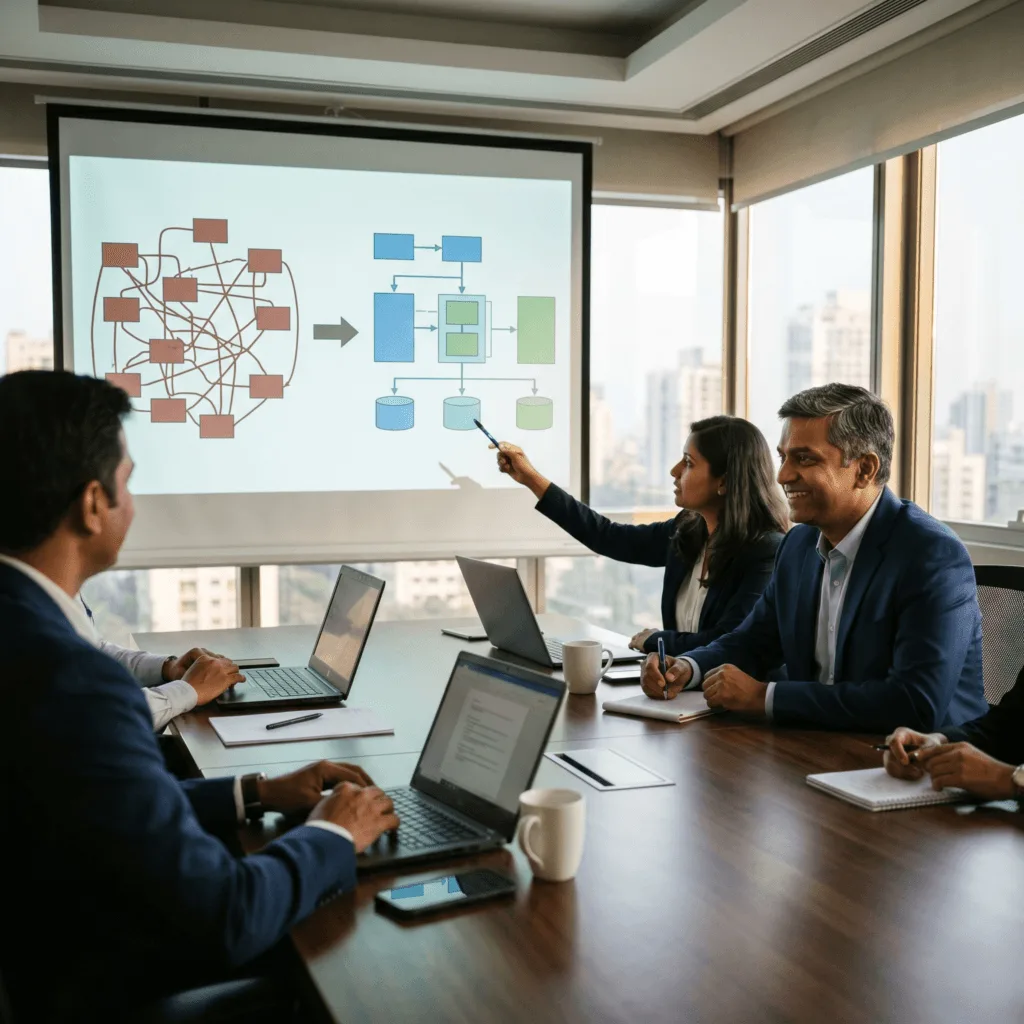
The Challenge: Pradeep’s logistics startup had built its initial platform quickly to capture market opportunity, and it had worked, but the codebase was now a technical debt nightmare. New features took longer to build every quarter as developers navigated the complexity, and performance was degrading as usage grew. The platform needed rebuilding but the business couldn’t stop.
The vorza360 Solution: We refactored the platform incrementally rather than rebuilding it from scratch, identifying the most problematic sections first, rebuilding them in isolation, and integrating the improved components without disrupting the running system. Performance improvements appeared throughout the process as each section was addressed.
The Result: Feature delivery speed improved noticeably within three months as the most tangled parts of the codebase were addressed. Performance recovered as the architecture improved. Pradeep’s development team described working on the platform as significantly less painful, and the business continued operating throughout without any downtime.
Johanna Berg (Sweden)
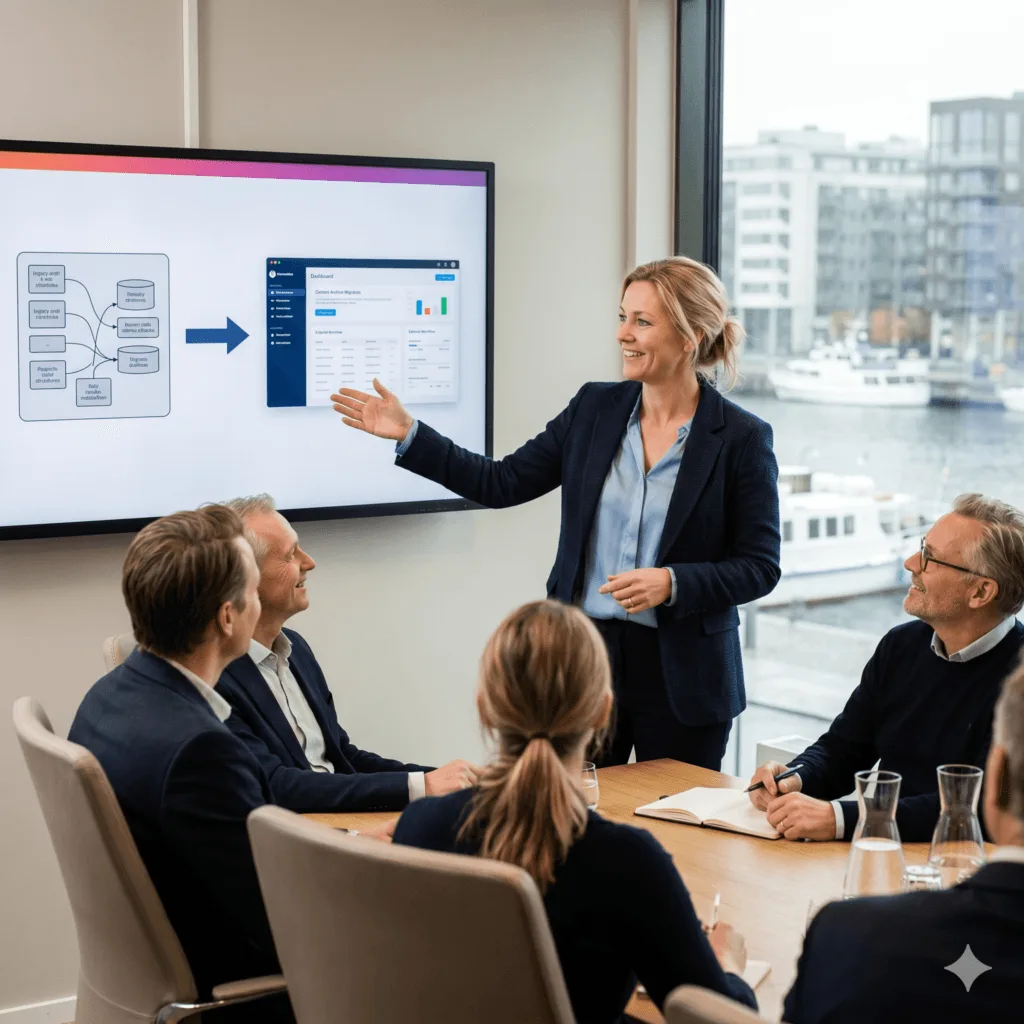
The Challenge: Johanna’s media company had a content management system that had been built entirely in-house ten years ago. It held fifteen years of archived content and was the daily tool for their editorial team, but it ran on technology that was becoming impossible to maintain, and finding developers who understood the stack was increasingly difficult and expensive.
The vorza360 Solution: We migrated the content archive and rebuilt the editorial tools on a modern, well-supported stack. The archive migration was the most complex part, fifteen years of content in a proprietary format required careful extraction and transformation. The editorial interface was redesigned in close collaboration with the team who used it daily.
The Result: Johanna’s editorial team adopted the new system willingly because it had been built around their actual workflow rather than imposed on them. The fifteen-year archive was fully accessible and searchable from day one. Maintenance became straightforward, finding developers who understood the new stack was no longer the challenge it had been.

Chidi Okafor (Nigeria)
The Challenge: Chidi’s bank had a customer onboarding process that involved a mix of a legacy web application, paper forms, and manual data entry into a core banking system. The process took multiple days, had a high error rate from the manual steps, and was increasingly out of step with customer expectations for digital onboarding.
The vorza360 Solution: We redesigned and rebuilt the onboarding process as a fully digital flow, document capture, identity verification, form completion, and core banking system population all handled without manual intervention. The legacy components were replaced progressively, with the most customer-visible improvements delivered first.
The Result: Customer onboarding time dropped from multiple days to same-day for standard applications. The error rate from manual data entry effectively disappeared. Chidi’s operations team redirected the time they’d spent on manual onboarding to exception handling and customer relationship work, tasks that actually benefited from human attention.
vorza360’s Tech Edge
Legacy System Analysis Tools
Monolith-to-Microservices Strategy
Database Refactoring Techniques
+ 2
More
Cloud Migration Frameworks
Compatibility & Regression Testing
vorza360’s Tech Edge
Legacy System Analysis Tools
We use “digital x-ray” tools to scan your old software, finding hidden risks and mapping out exactly how to modernize it without losing your important data.
Monolith-to-Microservices Strategy
Our team provides a “break-apart” service, turning your one giant, slow program into several small, fast pieces that are much easier to update and grow.
Database Refactoring Techniques
We provide a “data cleanup” service that reorganizes your old filing systems into modern, high-speed formats, making your information easier to find and use.
Cloud Migration Frameworks
Our team uses a professional “moving day” plan to shift your software to secure cloud servers like AWS or Azure, reducing your hardware costs and boosting speed.
Compatibility & Regression Testing
We provide a “stability check” service that tests every corner of your new system to make sure all your old features still work perfectly after the move.
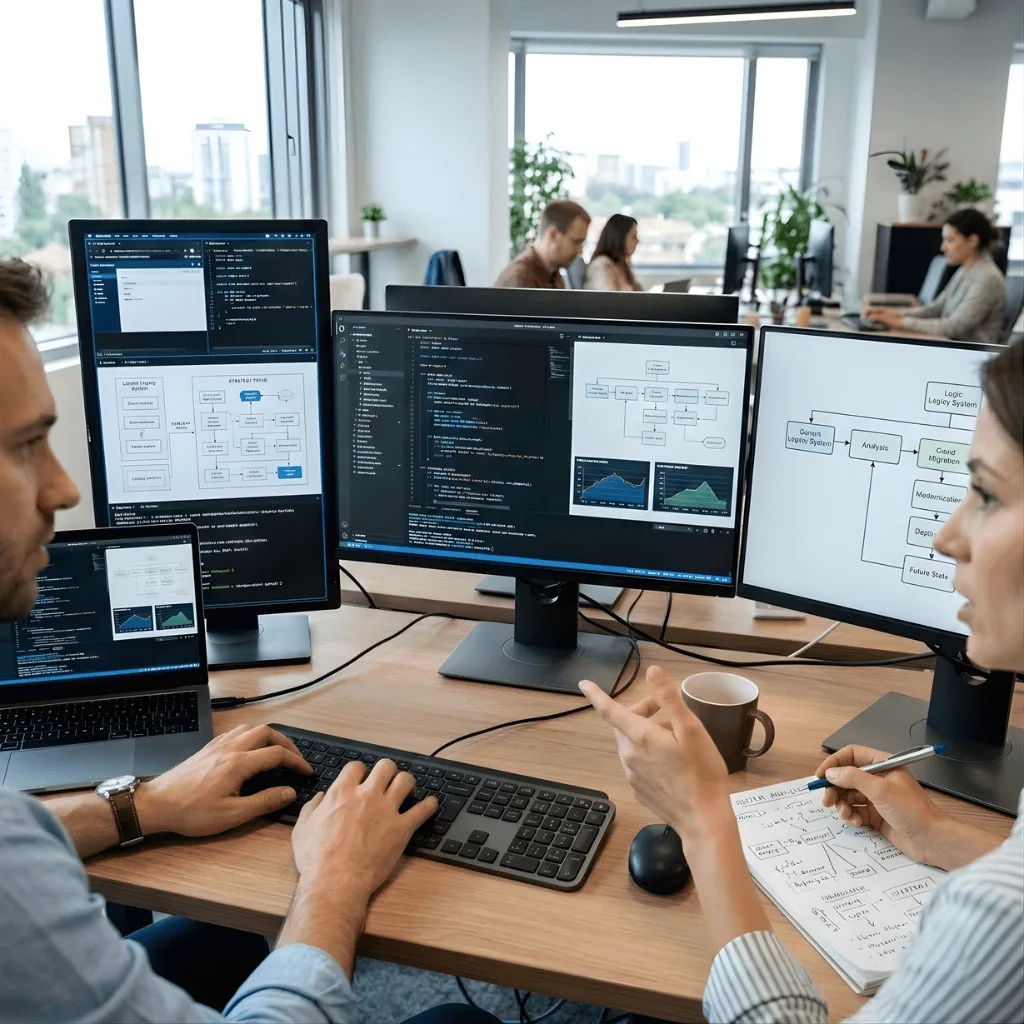
Legacy System Assessment & Strategy
We start by analyzing your old system’s condition and defining the best path forward.
Advantages
- We conduct a deep audit of your current code, performance, and architecture.
- This helps us define the most cost-effective strategy: rewrite, re-platform, or retire.
- We create a detailed roadmap for the entire modernization journey.
- This crucial step minimizes risk and maximizes the return on investment.
- This foundational work guides all future software modernization services.
Cloud Migration & Re-Platforming
We move your application to a scalable, secure cloud environment (AWS, Azure, Google Cloud).
Advantages
- We strategically move your applications and data to the cloud with minimal downtime.
- This involves updating the operating system and database to run natively on the chosen cloud platform.
- We optimize the cloud setup to control costs and improve availability.
- Custom software modernization development services ensure a perfect fit for the new environment.
- This step unlocks true scalability and global reach.
Code Refactoring & Rewriting
We update or replace old, inefficient code to create modern, flexible applications.
Advantages
- We refactor existing code to adopt modern languages and frameworks (like Java, Python, or .NET Core).
- We break massive applications into smaller, independent microservices for better flexibility.
- This process reduces technical debt and makes the application easier to update.
- We can provide custom government software modernization development services with strict compliance.
- The result is a high-performing, maintainable codebase.
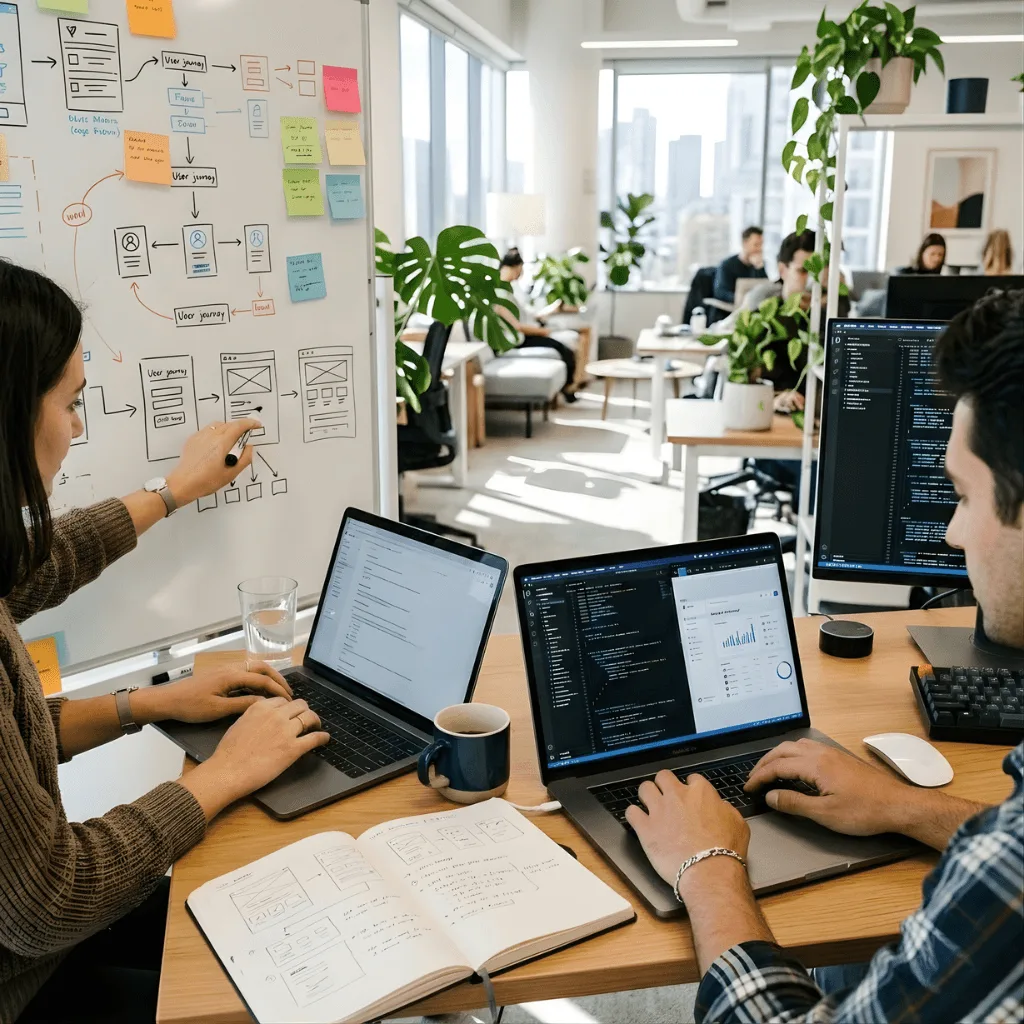
UI/UX Redesign & Improvement
We focus on redesigning the user interface to improve productivity and adoption.
Advantages
- We give your old application a modern, intuitive, and consistent look and feel.
- We enhance the user experience to simplify complex workflows and reduce errors.
- This is vital for increasing satisfaction among employees and customers.
- We ensure the new interface is fully responsive across all devices (desktop and mobile).
- A modern UI is key to the success of all software modernization services.
Integration and Data Management
We update or replace old, inefficient code to create modern, flexible applications.
Advantages
- We specialize in software integration and modernization services, connecting the new system with legacy platforms.
- We manage the secure migration and transformation of all existing business data.
- We implement an API layer to standardize communication between all internal systems.
- This ensures complete data integrity and smooth operations during and after the transition.
- Seamless integration maximizes enterprise-wide efficiency.
Legacy System Assessment & Strategy
We start by analyzing your old system’s condition and defining the best path forward.
Advantages
- We conduct a deep audit of your current code, performance, and architecture.
- This helps us define the most cost-effective strategy: rewrite, re-platform, or retire.
- We create a detailed roadmap for the entire modernization journey.
- This crucial step minimizes risk and maximizes the return on investment.
- This foundational work guides all future software modernization services.
ADVANTAGES
- We conduct a deep audit of your current code, performance, and architecture.
- This helps us define the most cost-effective strategy: rewrite, re-platform, or retire.
- We create a detailed roadmap for the entire modernization journey.
- This crucial step minimizes risk and maximizes the return on investment.
- This foundational work guides all future software modernization services.
Cloud Migration & Re-Platforming
We move your application to a scalable, secure cloud environment (AWS, Azure, Google Cloud).
Advantages
- We strategically move your applications and data to the cloud with minimal downtime.
- This involves updating the operating system and database to run natively on the chosen cloud platform.
- We optimize the cloud setup to control costs and improve availability.
- Custom software modernization development services ensure a perfect fit for the new environment.
- This step unlocks true scalability and global reach.
ADVANTAGES
- We strategically move your applications and data to the cloud with minimal downtime.
- This involves updating the operating system and database to run natively on the chosen cloud platform.
- We optimize the cloud setup to control costs and improve availability.
- Custom software modernization development services ensure a perfect fit for the new environment.
- This step unlocks true scalability and global reach.
Code Refactoring & Rewriting
We update or replace old, inefficient code to create modern, flexible applications.
Advantages
- We refactor existing code to adopt modern languages and frameworks (like Java, Python, or .NET Core).
- We break massive applications into smaller, independent microservices for better flexibility.
- This process reduces technical debt and makes the application easier to update.
- We can provide custom government software modernization development services with strict compliance.
- The result is a high-performing, maintainable codebase.
ADVANTAGES
- We refactor existing code to adopt modern languages and frameworks (like Java, Python, or .NET Core).
- We break massive applications into smaller, independent microservices for better flexibility.
- We can provide custom government software modernization development services with strict compliance.
- This process reduces technical debt and makes the application easier to update.
- The result is a high-performing, maintainable codebase.
UI/UX Redesign & Improvement
We focus on redesigning the user interface to improve productivity and adoption.
Advantages
- We give your old application a modern, intuitive, and consistent look and feel.
- We enhance the user experience to simplify complex workflows and reduce errors.
- This is vital for increasing satisfaction among employees and customers.
- We ensure the new interface is fully responsive across all devices (desktop and mobile).
- A modern UI is key to the success of all software modernization services.
ADVANTAGES
- We give your old application a modern, intuitive, and consistent look and feel.
- We enhance the user experience to simplify complex workflows and reduce errors.
- This is vital for increasing satisfaction among employees and customers.
- We ensure the new interface is fully responsive across all devices (desktop and mobile).
- A modern UI is key to the success of all software modernization services.
Integration and Data Management
We update or replace old, inefficient code to create modern, flexible applications.
Advantages
- We specialize in software integration and modernization services, connecting the new system with legacy platforms.
- We manage the secure migration and transformation of all existing business data.
- We implement an API layer to standardize communication between all internal systems.
- This ensures complete data integrity and smooth operations during and after the transition.
- Seamless integration maximizes enterprise-wide efficiency.
ADVANTAGES
- We specialize in software integration and modernization services, connecting the new system with legacy platforms.
- We manage the secure migration and transformation of all existing business data.
- We implement an API layer to standardize communication between all internal systems.
- Seamless integration maximizes enterprise-wide efficiency.
- This ensures complete data integrity and smooth operations during and after the transition.
Here is what our Clients are saying About us

Sofia Eriksson (Sweden)
Our legacy system had been holding our business back for years, impossible to extend and understood by fewer people every year. vorza360 modernised it incrementally without disrupting our operations.
Tariq Al-Zahrani (Saudi Arabia)
vorza360 migrated our on-premises software to a cloud-native architecture delivering better performance, higher availability, and lower operational cost. Our users experienced improvement rather than disruption.
Dragoș Popa (Romania)
vorza360 modernised our monolithic application into a service-oriented architecture that our teams can develop and deploy independently. Development velocity has improved significantly since the modernisation.
Rahul Kumar (Pakistan)
vorza360 rewrote our legacy desktop application as a modern web application without losing any functionality users relied on. Adoption was immediate because it did everything the old version did plus new capabilities.
Kenji Watanabe (Japan)
vorza360 modernised our database layer from an outdated proprietary database to PostgreSQL. The migration preserved every data relationship, improved query performance, and eliminated a significant licensing cost.
Chidinma Okafor (Nigeria)
vorza360 migrated our business-critical software from an end-of-life platform to a modern stack without losing any data or functionality. The cutover was completed without the extended downtime our team had feared.
More about Software
Custom Software Development
vorza360 is a leading custom software development company, providing end-to-end…
Desktop Application Development
vorza360 is an expert desktop application development company, offering full-cycle desktop…
SaaS Application Development
vorza360 is a dedicated SaaS application development company, we specialize in creating…
API Development & Integration
vorza360 is your dedicated partner for API development and integration services, creating…
Enterprise Software Solutions
vorza360 is an expert enterprise software solutions development company, creating…
Cross-Platform Application Development
vorza360 is a leading cross platform application development company, providing cross…
+ 5
More
Software QA & Testing Services
vorza360 offers software testing & QA services to guarantee the quality, performance, and…
Software Maintenance & Support
vorza360 offers comprehensive software maintenance and support services to ensure your…
Workflow Automation Software
vorza360 provides expert workflow automation software services, helping your business…
More about Software
Custom Software Development
Desktop Application Development
SaaS Application Development
+ 12
More
API Development & Integration
Enterprise Software Solutions
Cross-Platform Application Development
Software QA & Testing Services
Software Maintenance & Support
Frequently Asked Questions
Got questions? We’ve got answers. Find everything you need to know about using our platform, plans, and features
What software modernization and migration services does vorza360 offer?
vorza360 provides five software modernization services: Legacy System Assessment & Strategy (a deep audit of current code, performance, and architecture followed by the most cost-effective modernization path, rewrite, re-platform, or retire), Cloud Migration & Re-Platforming (moving applications to AWS, Azure, or Google Cloud with minimal downtime), Code Refactoring & Rewriting (updating legacy code to modern languages and frameworks, and breaking monolithic applications into microservices), UI/UX Redesign & Improvement (modernizing the interface to improve productivity and adoption across all devices), and Integration & Data Management (connecting the modernized application to existing business systems with seamless, secure data migration maintaining complete data integrity).
How does vorza360 decide whether to refactor, re-platform, or rewrite legacy software?
vorza360’s Legacy System Assessment evaluates the legacy system across four dimensions: technical debt severity (how much the existing codebase actively slows development and creates risk), business value of the functionality (high-value core business logic warrants more investment to preserve), integration complexity (how deeply the system is embedded in surrounding processes and connected systems), and modernization ROI (whether the cost and disruption of rewriting delivers sufficient benefit over re-platforming or refactoring). Generally: systems where the logic is sound but the platform is outdated are good candidates for re-platforming; systems where the code quality is poor but the application is critical are candidates for refactoring; and systems that are fundamentally misaligned with modern business needs are candidates for a strategic rewrite. vorza360 provides this recommendation with full financial modeling so you can make an informed decision.
How does vorza360 migrate a legacy application to the cloud without disrupting business operations?
vorza360’s Cloud Migration approach uses a parallel-run strategy: we build and configure the new cloud environment alongside the existing system, migrate and validate data in a staging environment, run both systems in parallel for a defined period to confirm the cloud environment handles all real-world scenarios correctly, then execute the cutover during a low-traffic window. The existing system remains on standby as an immediate rollback option throughout the cutover period. For applications that must migrate with zero planned downtime (e.g., financial systems or customer-facing platforms), we use live data replication during migration so the cloud environment stays synchronized with production up to the moment of final cutover, minimizing both risk and downtime to minutes rather than hours.
What is a monolith-to-microservices migration and when does vorza360 recommend it?
A monolithic application bundles all functionality into a single, tightly coupled deployable unit, any change requires redeploying the entire application, a single bug can take down all features, and different parts cannot be scaled independently. Microservices breaks the application into small, independently deployable services that each own a specific business capability (e.g., user management, payments, notifications, inventory) and communicate via APIs. vorza360 recommends microservices migration when: the monolith’s size makes deployments slow and risky, different parts of the application have dramatically different scaling requirements, multiple teams are working on the same codebase and causing conflicts, or specific components need to be rewritten in a different technology. For smaller teams or applications with consistent load, a well-structured monolith is often simpler and more appropriate, vorza360 will tell you honestly when microservices complexity is not justified.
How does vorza360 preserve SEO rankings and user data during a software migration?
During web-application modernization, vorza360 implements specific technical measures to preserve SEO equity: auditing all existing URLs and implementing 301 permanent redirects from old URL patterns to new ones (ensuring Google’s indexing follows the migration), preserving all existing meta titles, descriptions, structured data, and canonical tags in the new system, maintaining site speed performance through the migration (a core Google ranking factor), and monitoring Google Search Console closely in the 6-8 weeks post-migration to catch and resolve any ranking anomalies quickly. For user data, Compatibility & Regression Testing and Data Normalization Pipelines validate that all migrated data is complete, accurate, and consistent before the old system is decommissioned, no data is deleted until a full validation pass is signed off.