vorza360 specializes in interaction design animation and motion to create dynamic user experiences. We provide animation and interaction design services to build engaging websites and apps that move, respond, and excite users.
The Challenge: Leila ran an architecture and interior design studio whose static website failed to communicate the dynamic, immersive quality of her work. Prospective clients who visited the site before a meeting frequently described it as ‘a bit flat’, the work in the portfolio was transformative but the photography, presented without context or motion, didn’t convey the spatial experience her designs created. She was losing clients to competitors whose digital presence was more experiential.
The vorza360 Solution: We designed an interactive portfolio experience using subtle scroll-triggered animations that revealed each project progressively, allowing the spatial narrative of each design to unfold as the visitor explored rather than being presented all at once. We built a 3D room walkthrough component for two signature projects using WebGL, allowing prospective clients to explore the finished spaces interactively. All animations were performance-optimised to load smoothly on standard connections.
The Result: Leila’s portfolio site immediately drew positive comments from visitors in the first week, several reached out specifically to mention the site experience rather than the work. Meeting conversion from prospective client contacts improved, with multiple new clients mentioning the site experience as having made them curious to see her work in person. Her average project value increased as the interactive presentation positioned the studio at a premium tier it had always occupied in quality but not consistently in perception.
Tobias Müller (Germany)
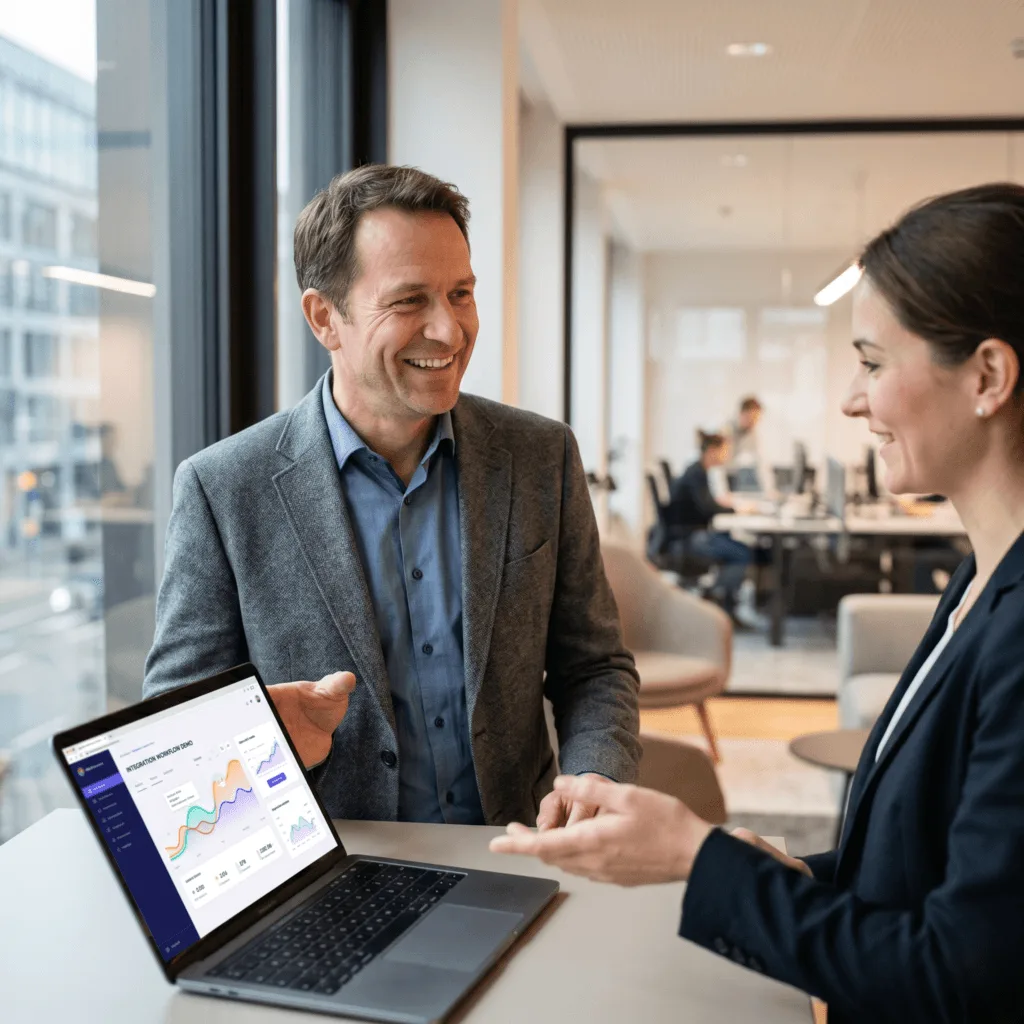
The Challenge: Tobias ran a software company that offered a complex enterprise integration platform. The product was powerful but difficult to explain in text and static screenshots, and sales demonstrations required a forty-minute setup that limited how often the team could show the product. Prospects who couldn’t attend a live demo frequently declined to proceed because they couldn’t understand what the product did from the website alone.
The vorza360 Solution: We designed an interactive product tour on the website using animated, clickable interface simulations that let visitors experience the core product workflows without a live demo or account creation. We used micro-animations to illustrate the data flow that was the product’s core value, making the invisible logic of integration visible through motion. The tour was structured as a ten-minute self-guided exploration that could replace the forty-minute demo for initial qualification.
The Result: Demo request conversion increased by 45% as visitors who completed the interactive tour were more motivated to see the full product. Sales demo-to-proposal conversion improved because prospects arrived at live demos already familiar with the core concepts, allowing the sales team to address specific use cases rather than explaining fundamentals. Tobias described the interactive tour as having compressed weeks of a typical sales cycle by moving the first demonstration earlier and making it self-serve.
Amara Koné (Côte d'Ivoire)
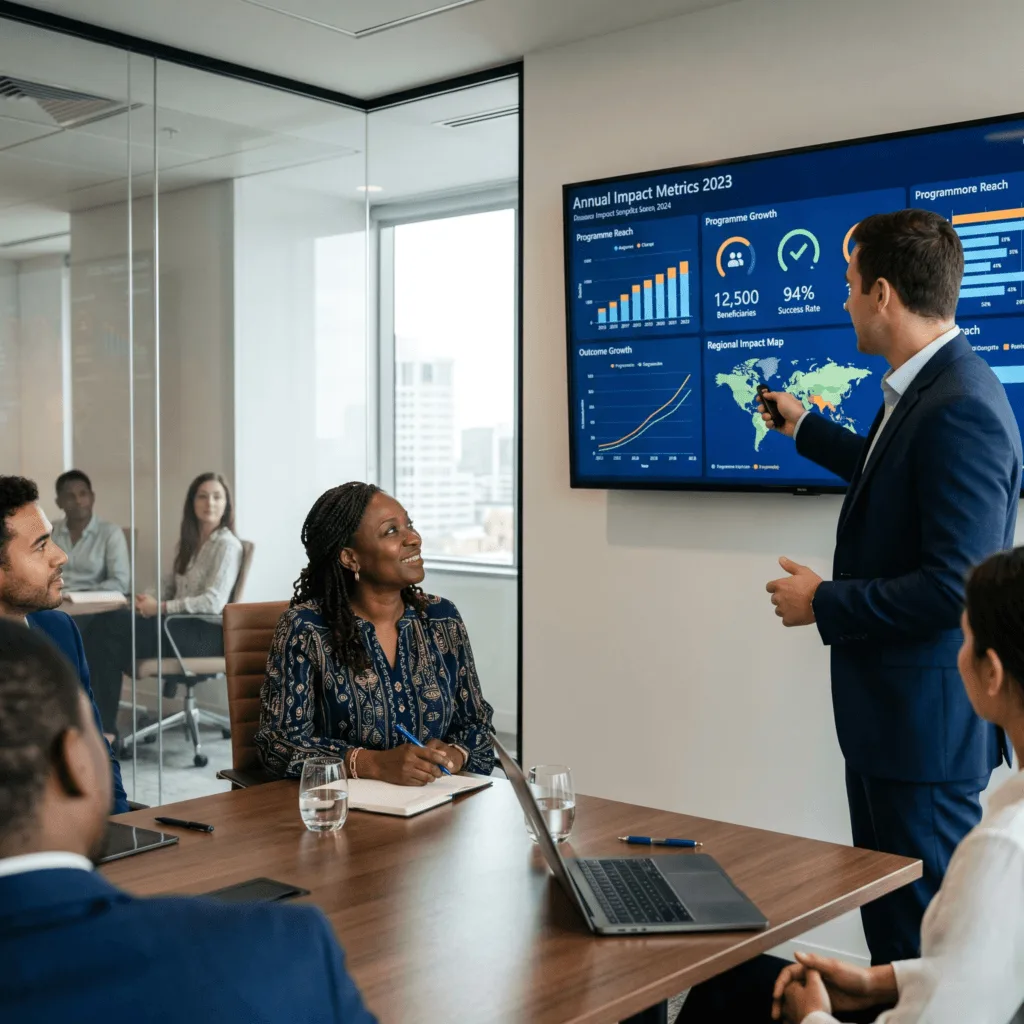
The Challenge: Amara ran an NGO that reported to international donors on programme impact. Annual reports were lengthy PDF documents that few donors read beyond the executive summary. Donor satisfaction surveys consistently noted that while the programme outcomes were strong, the reporting was difficult to navigate and the impact data was presented in ways that required significant effort to interpret.
The vorza360 Solution: We built an interactive annual report website that replaced the static PDF with a data-driven, animated impact presentation. Programme outcome data was presented through animated data visualisations that built progressively as the visitor scrolled, each number appeared with a brief animation that drew attention to its significance. We built a map component that showed programme reach geographically and an interactive timeline of the organisation’s growth. The site was designed to be shareable on social media in section-level extracts.
The Result: Donor-reported engagement with the annual report increased dramatically, the average time spent with the interactive report was fourteen minutes, compared to an estimated two minutes for the PDF. Two major donors specifically referenced the report in their renewal communications, citing it as among the clearest impact presentations they had received from any grantee. One donor increased their grant amount and cited the organisation’s transparency and communication quality as a factor in the decision.
Yuki Fujimoto (Japan)
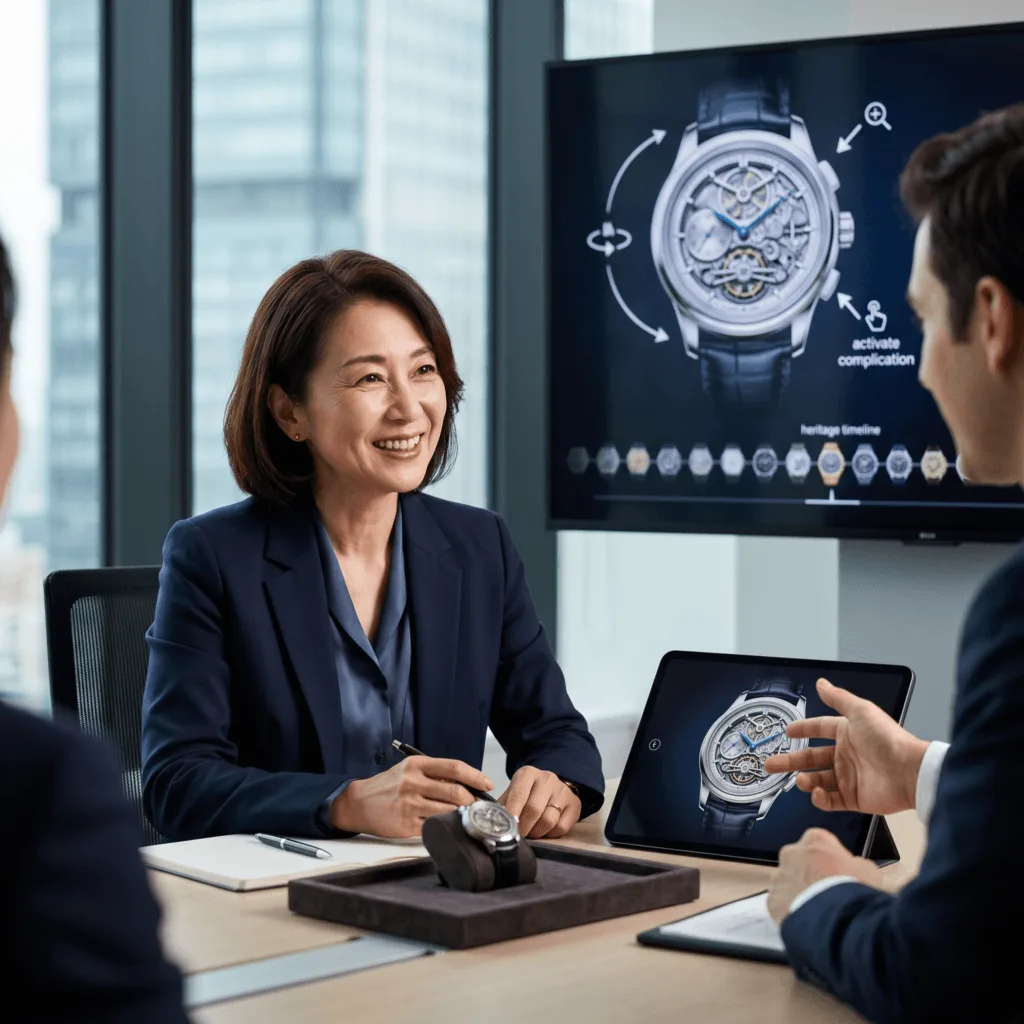
The Challenge: Yuki ran a luxury watchmaker whose website presented their timepieces through standard e-commerce photography, flat lay images against white backgrounds. The watches were objects of extreme craftsmanship, but the photography failed to convey the tactile and mechanical qualities that distinguished them. Online sales were minimal and the site was losing the opportunity to convert the appreciation generated by social media into purchase intent.
The vorza360 Solution: We designed an interactive product experience that let visitors explore each watch in 360-degree 3D rotation, zoom to examine dial details and movement finishing, and activate a mechanism animation showing the complication in motion. We built a heritage timeline for the brand using scroll-driven animation that presented the watchmaking history as an immersive narrative. All 3D models were rendered at the level of detail required to show the craft at the quality the brand represented.
The Result: Online sales from direct website traffic increased by 280% in the three months following the interactive design launch. Average session duration tripled as visitors engaged with the product exploration tools. Two wholesale buyers who had declined listings in previous years requested to review the collection again after experiencing the website, the interactive presentation had communicated quality that static images hadn’t conveyed. Yuki described the website redesign as having finally made the digital experience worthy of the physical product.
Precious Okafor (Nigeria)
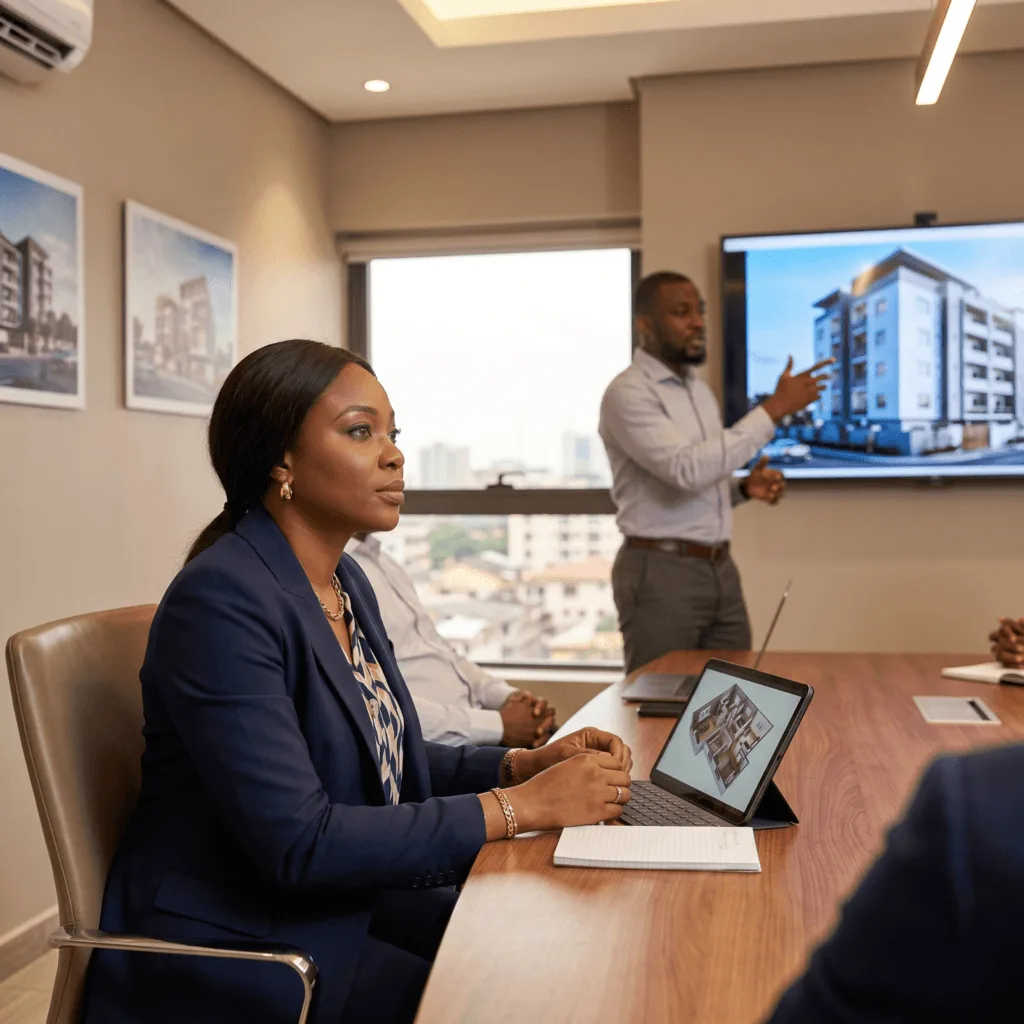
The Challenge: Precious ran a real estate developer whose project website needed to sell off-plan apartments before construction was complete. Prospective buyers were being asked to commit significant capital to a building that didn’t yet exist, and the existing presentation, architect renders and a PDF floor plan, was generating interest but not conversions. Buyers wanted to understand what they were purchasing at a depth the static materials couldn’t provide.
The vorza360 Solution: We built an interactive off-plan sales experience using 3D architectural visualisation that allowed prospective buyers to walk through each apartment type, view the building from different approach angles and times of day, and explore the site context. We built a unit selection tool with interactive floor plan navigation where buyers could select their specific unit and see their exact views and orientation. The experience worked on mobile, tablet, and desktop without any software download.
The Result: Off-plan sales reservation rate increased by 65% in the two months following the interactive site launch. The development sold out of its priority release two weeks ahead of target. Precious’s selling agents reported that site visits were less necessary, buyers were arriving at in-person meetings having already made a preliminary decision based on the interactive experience and using the meeting to confirm rather than explore. The interactive sales experience was retained as a standard element of all subsequent developments.
Sofia Lindström (Sweden)
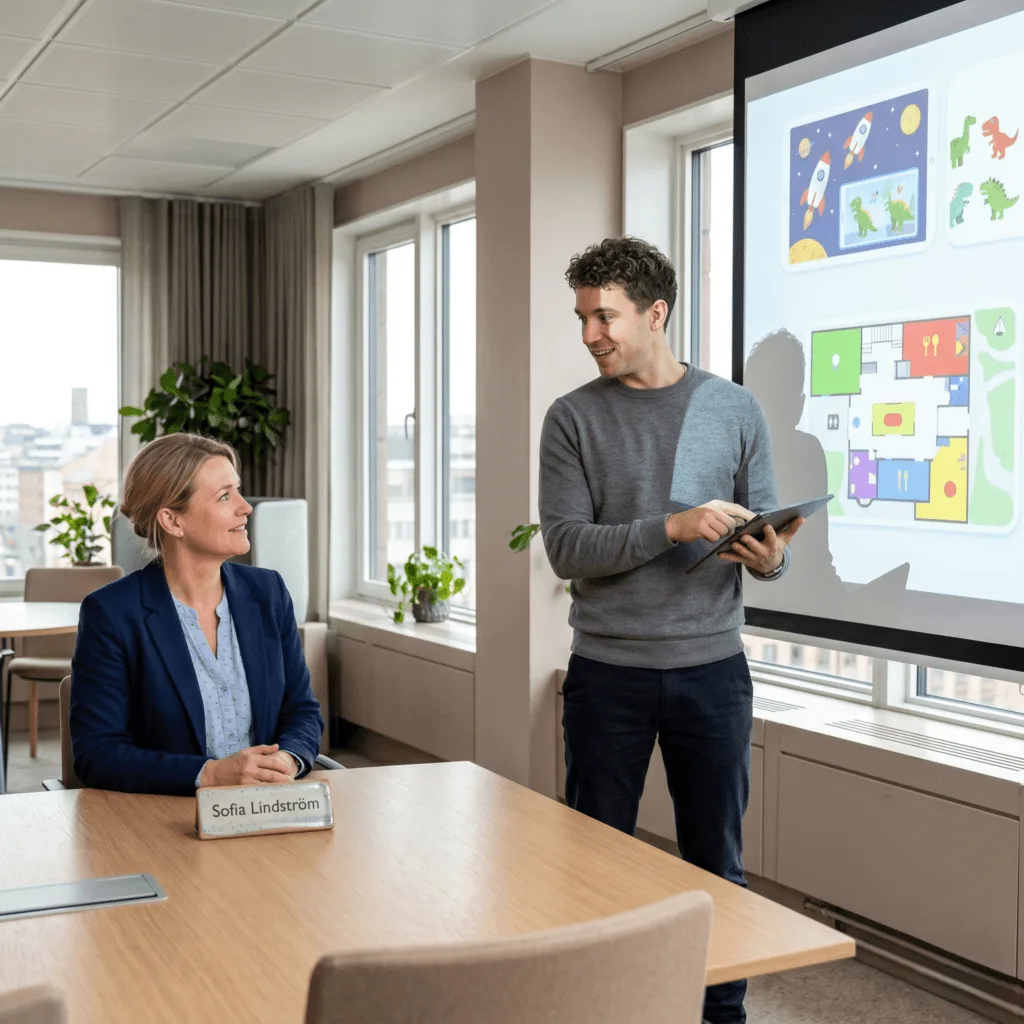
The Challenge: Sofia managed a science museum that was competing for family visits against entertainment alternatives. The museum’s website was informative but static, it told visitors what the museum had but gave them no sense of why it was worth a visit over other options. Visitor research showed that children who visited always wanted to return but that parents making initial decisions from the website often chose other destinations.
The vorza360 Solution: We redesigned the museum website with child-oriented interactive elements that gave young visitors a preview experience before arriving. We built animated mini-games based on exhibits, an interactive map of the museum with exhibit ‘teasers’, and a ‘plan your visit’ tool that let families customise their route based on age group and interests. The interactive elements were designed to be used by children directly, making the website persuasive to the decision-influencing audience rather than only to the decision-making parents.
The Result: Website-driven ticket sales increased by 48% in the first quarter after the redesign. Visitor dwell time at the museum increased as visitors were arriving with a planned agenda rather than wandering. A post-visit survey found that families who had used the interactive website elements before visiting rated their experience higher on average than those who had not, suggesting the pre-visit engagement had improved the visit itself. Sofia described the website as having become part of the museum experience rather than just a marketing channel.
How we do it
We follow a creative process to design animated and interactive user interfaces that are both fun and functional.
Plan the Motion
We start by defining the goal of the animation, creating a simple storyboard of the user experience. This guides the interaction animation design.
Design the Experience
We build and test working prototypes (samples) of the animation and interaction flow with users. We make sure the motion is smooth and helpful, not distracting.
Develop and Integrate
We create the final animated files and code, ensuring they are light, fast, and easy to integrate into your website or app.
Plan the Motion
We start by defining the goal of the animation, creating a simple storyboard of the user experience. This guides the interaction animation design.
Design the Experience
We build and test working prototypes (samples) of the animation and interaction flow with users. We make sure the motion is smooth and helpful, not distracting.
Develop and Integrate
We create the final animated files and code, ensuring they are light, fast, and easy to integrate into your website or app.
Tools
AMP Plugin for eCommerce Frameworks
Figma/Adobe XD
Advanced tools used for prototyping, where we design the sequence and timing of all interactions.
Adobe After Effects
Professional software used to create complex, high-quality animations and motion graphics for websites and apps.
Lottie/Rive
Specialized software and file formats that allow high-quality animations to run smoothly and quickly on any website or mobile app.
CSS/JavaScript Libraries
Code frameworks and tools (like GreenSock Animation Platform, GSAP) used to manage complex movement and dynamic visual changes.
Multiple Platform Support
Our animation interaction design services ensure your interactive elements work perfectly across all modern digital environments.
Web Browsers
Ensuring flawless performance on all desktop and mobile web browsers (Chrome, Safari, Firefox).
iOS Apps
Creating native-looking animations and interactions for Apple iPhone and iPad applications.
Android Apps
Designing dynamic elements that work perfectly across the diverse range of Android devices.
Touch Screens
Designing for large, interactive screens used in kiosks, trade shows, or public information points.
Virtual Reality (VR) Experiences
Designing interactive elements for immersive digital environments.
E-commerce Checkouts
Creating smooth, responsive interactions for online shopping carts and payment flows.
Web Browsers
Ensuring flawless performance on all desktop and mobile web browsers (Chrome, Safari, Firefox).
iOS Apps
Creating native-looking animations and interactions for Apple iPhone and iPad applications.
Android Apps
Designing dynamic elements that work perfectly across the diverse range of Android devices.
Touch Screens
Designing for large, interactive screens used in kiosks, trade shows, or public information points.
Virtual Reality (VR) Experiences
Designing interactive elements for immersive digital environments.
E-commerce Checkouts
Creating smooth, responsive interactions for online shopping carts and payment flows.
Multiple Headless Frameworks Support
Goal-Driven Interaction
Ensuring every animation serves a purpose (e.g., showing a task is complete, guiding the user’s eye).
Speed and Performance Rules
Strict rules to ensure animations load fast and don’t slow down the website or app.
Motion Storyboarding
A simple planning method to define the start and end point of every moving element.
Anticipation and Feedback
Designing interactions that give a hint before a change happens, and clear feedback when an action is complete.
Material Design Guidelines
Google’s framework for consistent motion and interaction patterns in digital products.
Human Interface Guidelines (HIG)
Apple’s framework for creating intuitive and familiar interactions on their devices
Micro-Interaction Focus
Concentrating on small, helpful interactions (like a button changing color) to improve user satisfaction.
Usability Testing Protocol
A process to test all animations with real users to ensure they are intuitive, not distracting, and helpful.
Custom Headless Development
vorza360 is a creative digital agency that uses expert skills to meet your business needs and ensure customer satisfaction. We work across many different sectors to help brands grow and succeed online.
We define what interaction needs to be built and why (e.g., to guide user to checkout, to show a loading state).
Step 2
Storyboard the Motion
We create simple visual plans showing the start and end frames of the animation before any design work begins.
Step 3
Prototype the Interaction
We build a working, click-through sample to test the timing and flow of the movement and user control.
Step 4
Visual Design and Finalization
We apply the final brand look, colors, and graphics to the approved animation.
Step 5
Development and Coding
We create the final, lightweight animation files and integrate them into the website or app code.
Step 6
Testing and Launch
We thoroughly test the interaction on all supported platforms for speed and consistency before the final launch.
Here is what our Clients are saying About us
Thomas Brauer (Germany)
vorza360 designed an interactive website for our product launch with animations and interactions that communicated our product’s story far more effectively than static pages could. Visitor engagement time and conversion both improved significantly.
Tariq Al-Zahrani (Saudi Arabia)
vorza360 built an animated explainer sequence into our homepage that communicates our complex product simply through motion. Visitors understand what we do faster and our bounce rate from the homepage has reduced.
Vlad Petrescu (Romania)
vorza360 designed interactive data visualisations for our annual report that made our financial and impact data engaging rather than dense. Our stakeholders read more of our annual report since the interactive format replaced our previous static PDF.
Arjun Bose (India)
vorza360 designed interactive product demonstrations for our e-commerce site that let customers explore product features before purchasing. The interactive demos reduced returns because customers understood what they were buying.
Budi Santoso (Indonesia)
vorza360 created scroll-triggered animations for our website that bring our content to life as visitors read. The animations add energy to our brand without slowing the page, performance and creativity balanced correctly.
Kwame Asante (Ghana)
vorza360 designed an interactive map for our website that lets visitors explore our operational presence across Africa. An engaging way to communicate our geographic reach that static graphics could not achieve.
More about Website Design
Custom Website Design
vorza360 offers specialized custom website design solutions to create a unique…
Got questions? We’ve got answers. Find everything you need to know about using our platform, plans, and features
What is Interactive and Animated Web Design and how does it benefit a business website?
Interactive and Animated Web Design uses purposeful motion, scroll-triggered animations, hover effects, page transitions, micro-interactions, and dynamic visual elements, to make a website more engaging, intuitive, and memorable. When implemented correctly, animation guides the user’s attention to important content, provides instant visual feedback that makes the interface feel responsive and alive, and creates an emotional impact that reinforces your brand personality. vorza360 applies interaction design and motion with restraint and purpose, enough to make your site significantly more interesting and engaging than a static alternative, without creating visual clutter or slowing down performance.
What types of animations and interactive elements does vorza360 design and build?
Our interactive and animated design capabilities include: scroll-triggered content reveals that bring elements into view as the user scrolls down the page; parallax effects that create depth and visual interest; hover micro-interactions on buttons, cards, and navigation items; smooth page transition animations; loading animations for a polished feel; animated data visualizations and infographics; interactive product showcases with 360-degree views or feature reveals; and animated SVG illustrations that bring brand storytelling to life. We select and design each interactive element based on its specific purpose, ensuring every animation serves a UX or brand communication goal.
Does adding animations and interactive elements slow down a website?
Only if done incorrectly. vorza360 applies performance optimization as a core part of every animated design project. We use hardware-accelerated CSS animations and the CSS transform property to ensure all motion runs on the GPU rather than the CPU, preventing the frame rate drops that cause laggy animation. We lazy-load all animated assets so they only activate when a user scrolls to them. We avoid heavy JavaScript animation libraries where CSS alone achieves the same effect. And we test every animated page using Google Lighthouse and real-device testing to ensure performance scores remain high after all interactive elements are added.
How does vorza360 ensure animated design elements are appropriate for all users, including those with motion sensitivities?
Web accessibility standards require that websites respect users who have vestibular disorders or motion sensitivities that can be triggered by excessive on-screen motion. vorza360 implements the CSS prefers-reduced-motion media query as a standard practice in all animated web projects. This query detects when a user has enabled the reduced motion setting on their operating system and automatically disables or simplifies animations for those users, providing a perfectly functional, non-animated experience without requiring any manual override. This approach is both ethically responsible and required for WCAG accessibility compliance.
What industries or website types benefit most from interactive and animated design?
Interactive and animated design delivers the greatest impact in contexts where differentiation, emotional engagement, and memorable first impressions are business-critical. These include: digital agencies and creative studios showcasing their capabilities; SaaS products demonstrating complex features in an accessible way; luxury brands communicating premium positioning; portfolio websites making a strong personal impact; product launch pages creating excitement; corporate websites using motion to communicate innovation and modernity; and e-commerce sites using micro-interactions to make the shopping experience feel polished and trustworthy. vorza360 tailors the intensity and style of animation to the specific tone and audience of each project.